
VNC console (locked out?)
Sometimes you cannot SSH into a server: the key is wrong, a firewall rule shut the door, or the machine is stuck on boot. The VNC console is the way in that does not care about any of that. It is a live graphical screen of the machine, wired straight to its display, so it works even when the network to the server is broken.
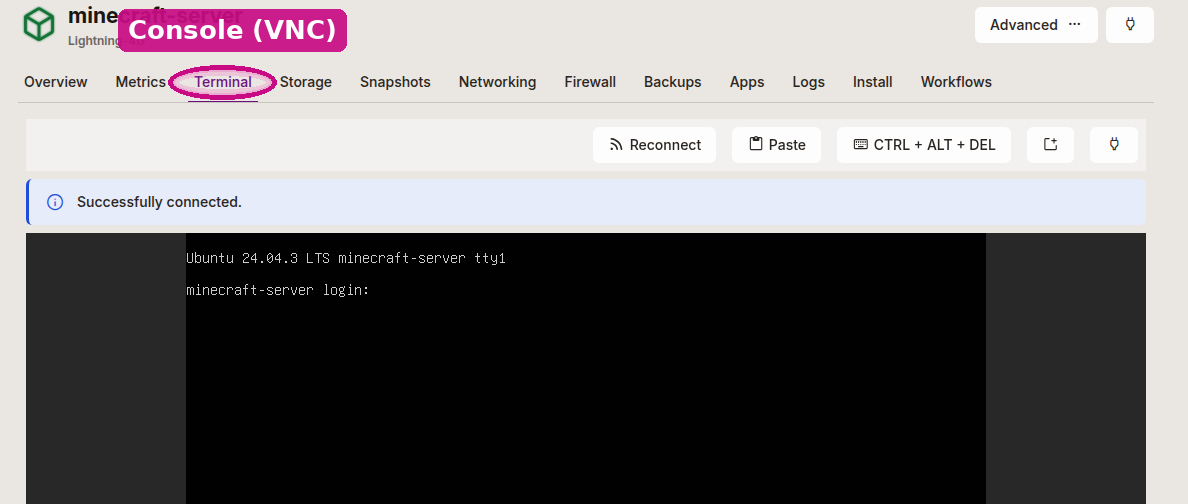
On any instance, the Terminal tab is the VNC console.
Find it
Open the server and look at the row of tabs across the top. The console lives under Terminal.
The Terminal tab is highlighted because that is the one you want. Click the label above to read what it does.
When to reach for it
Use the console any time SSH is not an option:
- SSH is broken or refuses your key.
- A firewall rule locked you out, including a rule you just added to your own server.
- The server will not finish booting, so no service is listening yet.
- You deleted or replaced the only key the server trusted.
Because the console is attached to the machine's screen rather than to the network stack, it keeps working in every one of these cases.
Using the console
Along the top of the console are a few controls:
- Reconnect reopens the connection if the screen freezes or goes blank.
- Paste sends text from your clipboard into the console, which is handy because a raw graphical console does not paste on its own.
- CTRL + ALT + DEL sends that key combination to the machine, the same way you would press it on a physical keyboard.
The console shows you the machine's login prompt, exactly as if you were sitting in front of it. Logging in still needs a password. If you do not have the root password, or you have forgotten it, reset it first and then log in here.
Once you are logged in at the console, common recovery jobs include:
- Fixing or removing the firewall rule that locked you out.
- Adding your SSH key back into
~/.ssh/authorized_keys. - Restarting the SSH service or checking why it failed to start.
- Reading boot logs to see why the machine is not coming up.
A real login prompt
Here is the actual console showing a machine sitting at its login prompt, which is what you will see after you open the Terminal tab.
Related
- Passwords & reset set a known password so you can log in at the console.
- Connect over SSH the normal way in, for when SSH is working again.
- Power controls cleanly reboot or shut down once you are back in control.